
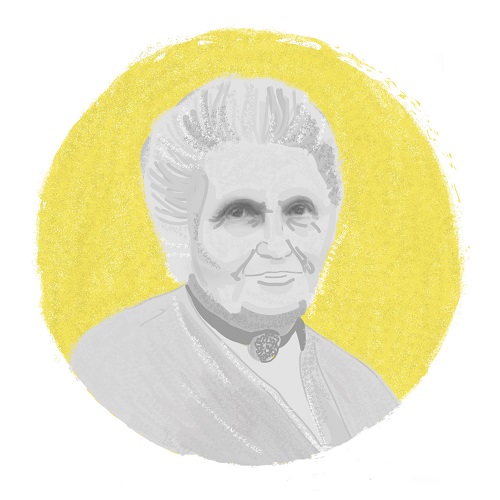
Maria Montessori's faith
Maria Montessori was a devout Catholic throughout her adult life. This was not incidental to her educational philosophy. She saw the child's natural drive toward goodness, toward beauty, toward order, and toward concentrated work as expressions of a spiritual nature, what she sometimes called the "spiritual embryo" of the human person. For Montessori, education was not merely cognitive or social development. It was the unfolding of the whole person, including the spiritual dimension.
She wrote extensively about what she called "cosmic education" in her elementary curriculum, the idea that understanding one's place in the universe, in history, and in the community of life was a fundamental educational task. This framework had both secular and spiritual dimensions that she did not entirely separate.
The Catechesis of the Good Shepherd
The most significant intersection of Montessori and religious education is the Catechesis of the Good Shepherd (CGS), developed in Italy in the 1950s by Sofia Cavalletti and Gianna Gobbi, both deeply influenced by Montessori's pedagogy. CGS applies Montessori principles, prepared environment, hands-on materials, the child's self-directed encounter with content, to the religious formation of children, primarily within Catholic contexts.
CGS programs exist worldwide. They are separate from Montessori schools but use the same pedagogical framework. Many Catholic Montessori schools incorporate CGS; many do not. It is worth asking specifically about a school's approach to religious education if this is important to your family.
Montessori schools and faith today
Montessori schools span the full spectrum of religious affiliation:
- Secular Montessori schools: the majority of private and all public Montessori programs. Religion is not part of the curriculum, though cultural and world-religion components may appear in the elementary cosmic education curriculum in an informational context.
- Catholic Montessori schools: a significant number of Catholic parochial and independent schools use the Montessori method, sometimes incorporating CGS and always with explicit Catholic faith formation alongside academic content.
- Christian Montessori schools: Protestant, non-denominational, and evangelical Christian schools also adopt Montessori frameworks, usually integrating Biblical content and prayer into the daily rhythm of the classroom.
- Interfaith and values-based Montessori schools: some schools emphasize universal values (peace, environmental stewardship, community) in ways informed by Montessori's own spiritual framework without aligning to a specific religious tradition.
Is Montessori compatible with religious family values?
Yes, with some nuance. The Montessori method's core principles (respect for the child, freedom within limits, hands-on learning, intrinsic motivation) are compatible with virtually any religious worldview. Nothing in the method requires a secular stance, and its founder was herself devout.
Where families occasionally encounter friction is in the elementary cosmic education curriculum, which addresses the origins of the universe, the history of life on Earth, and human prehistory from a broadly scientific perspective. This content is consistent with Catholic teaching (which accepts an old universe and evolutionary biology) but may conflict with the beliefs of families who hold to a young-earth creationist interpretation of Genesis. If this is relevant to your family, it is worth having a direct conversation with any prospective school about how they handle these topics.
For most religious families, the Montessori emphasis on wonder, careful attention, gratitude, and responsibility, the traits cultivated daily by the prepared environment and practical life work, aligns naturally with religious values, regardless of denomination.
Practicing Montessori at home as a religious family
The vast majority of Montessori home practice, the focus on independence, practical life work, prepared environment, and respectful interaction, is entirely compatible with any religious household. Many religious families find that the Montessori emphasis on wonder, beauty, and the child's inner life enhances rather than conflicts with their faith formation at home.
Resources specifically designed for religious Montessori home practice are widely available, particularly within the Catholic tradition following Cavalletti's work. These include liturgical year materials, prayer space setups following Montessori principles, and scripture story materials designed with the control of error and hands-on exploration that Montessori materials always embody.